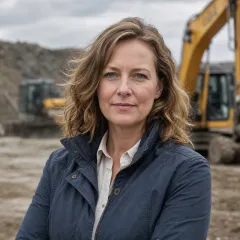
The dealer is the real product. The machine is just the packaging.
In my 5 years managing procurement for a 200-person construction firm, I've cycled through enough vendors to become cynical. Almost every sales pitch sounds the same: lowest price, fastest delivery, best service. And almost every one of those promises crumbles within 6 months.
But here's what shifted my perspective: the one vendor I've never had to second-guess is my Doosan forklift dealer. Not because they're the cheapest (they aren't) or flashiest (they're not). But because their local network treats my problems like their own.
I'll explain why that matters, plus the one thing I wish I'd known about air compressors before standardizing our fleet.
How I landed on Doosan (and why it wasn't about the spec sheet)
When I took over purchasing in 2020, my VP told me to cut 15% from equipment spend. My first instinct? Shop around. Get competitive quotes. Squeeze margins.
I did exactly that. I sourced quotes from 3 dealers for a fleet of forklifts and generators. I almost went with a vendor who came in 18% cheaper than my Doosan dealer. So glad I didn't. Their 'included warranty' meant calling a hotline where I waited 45 minutes for an operator, then was told to ship the forklift 200 miles for repairs. That would have put us down for 2–3 weeks during peak season.
I dodged a bullet. What I almost missed was that Doosan dealers are locally owned and stocked with parts. When my dealer says 'I'll have a tech onsite tomorrow morning,' they mean it. That's not written into any contract—it's just how their network works.
What this means for your day-to-day procurement
If you're managing procurement, you know that the cost of downtime is way higher than the cost of a machine. Let me break down the math from my own budget:
- Hourly downtime cost (lost labor + delayed project): about $1,200 for our crew.
- Typical repair time for a major issue at a remote dealer: 1–2 weeks.
- Our local Doosan dealer's typical repair time: 2–3 days for parts delivery, often same-day for minor fixes.
So the difference isn't 5% on a $50,000 forklift. It's potentially 2 weeks of downtime vs. 2 days. That's $12,000+ in hidden costs. The cheaper vendor's price advantage evaporates.
Put another way: a Doosan forklift dealer might cost 10% more upfront, but I'll take that every time over risking a $12,000 downtime event. That's not theory—we lived it in Q3 2023 when a competitor's generator failed during a heatwave.
Oh, and I should add: this applies doubly for specialized equipment like air compressors. A 200-gallon rotary screw compressor for our shop went down. My dealer had a loaner unit delivered same day. The competitor I'd almost chosen didn't even have their own rental fleet. That's the gap.
The one thing about air compressors nobody told me
Speaking of air compressors: here's a tip that would've saved me major hassle.
Most people think an air compressor is a simple 'plug and play' tool. It's not. You need to think about air quality, filtration, and piping before you buy.
I can only speak to industrial setups, but for a construction shop with 3–4 users, a 30-hp rotary screw compressor might sound fine. If your piping has too many bends, or your filters are undersized, you'll starve downstream tools. We saw a 40% performance drop in our pneumatic tools until we re-ran the piping.
Take this with a grain of salt: it's equipment-specific. But if your dealer doesn't offer a site assessment before the sale, I'd reconsider. My Doosan dealer did walkthroughs of our shop layout and suggested a specific filter setup that saved us from that same mistake.
Moral: the dealer who understands your context is worth more than the one who just ships you a box.
What if I'm wrong? (boundary conditions)
I should be honest: this approach works for us because we're a mid-size operation with predictable cyclic demand. If you're a small startup buying one generator for a 2-week project, a big network might not matter. You can get away with a competitive bid and hope for the best.
But if you have recurring needs, a fleet of 5+ machines, or any shared equipment across job sites—the dealer relationship becomes a force multiplier. In my experience, it's the biggest factor between smooth operations and constant fire-fighting.
Also: I'm speaking from a B2B perspective. The 'buy on price' approach makes more sense for strictly personal tools where downtime means inconvenience, not lost revenue. So keep your context in mind.
So what's my bottom line for you?
If you're evaluating Doosan forklift dealers—or any heavy equipment dealer—look past the price. Ask them: When my machine breaks, what's your actual response time? Do you have parts in stock locally? Can I talk to a tech who knows my setup?
If they can't answer those specifics, that's a red flag. If they can—and if they're willing to invest time in understanding your operation—that's the partner worth paying a premium for. In procurement, relationships scale. Discounts don't.
Prices and specs as of Q1 2025. Verify current availability with your local Doosan dealer.