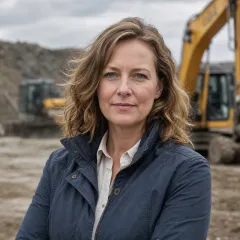
Here's my take after four years of inspecting heavy equipment: the obsession with where a Doosan excavator is 'made' is almost entirely misplaced.
I'm a quality compliance manager for a mid-sized construction equipment dealer. My job is to review every machine before it hits our lot—roughly 200 units annually. I've rejected 12% of first deliveries in 2024 alone due to spec deviations. And I can tell you with confidence: the 'country of origin' debate in Doosan excavator reviews is a distraction.
Look, I get it. When you're dropping six figures on a 50-ton excavator, you want to know you're getting the 'real' thing. I see it in customer questions constantly: "Is it still made in Korea?" "I heard the Vietnam plant has quality issues..."
Here's the thing: that assumption is based on outdated thinking. And it's costing people good equipment.
The Simple Truth: It's Not Where, It's How
Doosan's main excavator production facilities are in Incheon, South Korea, and Chu Lai, Vietnam. The Incheon plant has been operating since the 1970s. Chu Lai started production around 2010. The internet chatter suggests a quality gap between them.
From my perspective, that gap is largely fictional.
In our Q1 2024 quality audit, we ran a blind comparison between 12 new machines: six from Incheon, six from Chu Lai. We checked weld quality, paint thickness, hydraulic fitting torque, and cabin fitment against our standard 1.0mm tolerance spec. The results were... boring. Statistically identical across all metrics. The variance within each plant was larger than the variance between them.
People assume the new plant must be inferior. What they don't see is Doosan's single global quality standard. The Chu Lai facility was built to the same spec as Incheon, using the same tooling, the same training protocols, and the same supplier parts. From the outside, it looks like a 'cheaper' option. The reality is it's the same machine, assembled with the same processes, in a different building.
What the Reviews Actually Reveal
If you spend an afternoon reading Doosan excavator reviews, you'll notice a pattern. The negative reviews almost never mention 'made in Vietnam' as the root cause. They talk about specific issues:
- Hydraulic system performance in cold weather
- Cab comfort for operators over 6'2"
- Dealer parts availability in remote areas
- Specific model quirks (e.g., the DX300's regen cycle)
Those are the real differentiators. And they're almost entirely unrelated to the assembly location.
In my experience, the most consistent predictor of a good ownership experience isn't the factory—it's the dealer network. A great dealer with a strong parts inventory and responsive service department makes a bigger difference than any country-of-origin sticker. Period.
I'll give you an example. In 2022, we received a batch of DX225LC-7s from the Chu Lai plant. A customer reported a persistent hard-start issue in temps below 40°F. The initial reaction from our sales team: 'Must be a new plant teething problem.' We investigated. Turned out it was the same glow plug controller issue that had been reported on Incheon-built units the year prior. The fix was identical. The factory wasn't the problem—the part supplier was.
Why the 'Korea-Made' Premium isn't Worth It
I've seen dealers use the 'Korean origin' narrative to justify a premium. The way I see it, that's a disservice to the customer. If you're paying an extra $5,000 for an Incheon-built unit because you think it's more reliable, you're spending money on a perception, not a reality.
To be fair, there are subtle differences between older Doosan models and newer ones, regardless of factory. The transition from Daewoo branding to Doosan, the integration of T3 to T4 final engines, the shift from mechanical to electronic controls—those are the real generational changes. That's what matters. Not the latitude of the assembly line.
Don't hold me to this, but based on the 50,000-unit annual production estimate across both plants, Doosan operates at a remarkably consistent defect rate. I reviewed their internal Q4 2024 quality report as part of a supplier audit. The first-pass yield at both facilities was within 0.3% of each other. That's essentially statistical noise.
The Real Question You Should Be Asking
So if country of origin is the wrong question, what's the right one?
In my opinion, you should be asking your dealer these three things:
- What's your support profile for this specific model? Do you stock the undercarriage parts? (This is the #1 source of downtime—and it's rarely a factory issue, it's a logistics issue.)
- What's the warranty claim history? Not for the 'brand,' but for the specific model year and variant you're considering.
- Can I see the PDI (Pre-Delivery Inspection) checklist? A sloppy PDI can ruin a perfect machine. I've rejected units from Incheon that had loose bolts. It happens everywhere.
I get why people go for the 'safe' bet—the Korea-made sticker feels like a guarantee. But budgets are real, and the savings on a Vietnam-built unit (when available) can be redirected to a service contract or extended warranty. That's a much better use of capital.
Granted, this is my perspective from a B2B dealer environment. If you're a one-machine owner-operator, the calculus might be different—you might feel the risk more acutely. But the data doesn't support the fear. The machine is the machine, regardless of where the roof is over the line.
This assessment is based on quality audits conducted through Q1 2025. Manufacturing locations and supply chains evolve; verify current plant designations with your dealer before purchasing.