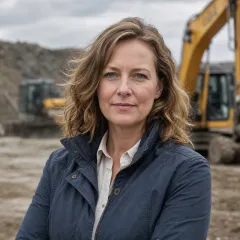
Procurement & operations manager at a mid-sized construction firm. I've managed our heavy equipment budget (~$180k annually) for six years, negotiated with 15+ vendors, and tracked every invoice in our cost system. This piece comes from the spreadsheet trenches.
If you’re searching for “Doosan equipment dealer” or wondering how to become a crane operator, you’ve probably noticed there’s more than one way to buy a machine—or its parts. You can go through an authorized dealer, source from a specialized parts distributor, or try the “direct” route via a wholesaler. Each path has its defenders, and each has hidden costs that won’t show up on the initial price quote.
I’ve run TCO comparisons on all three channels over the past two years. Here’s what I found, laid out as a head-to-head: Authorized Dealer vs. Direct / Independent Source. Because when you're managing a budget—and especially if you're new to the industry, like someone asking “how to become a crane operator”—the wrong choice can cost you thousands in downtime.
Why Compare These Two? (The Framework)
Before diving into the dirt, let me clarify the axis of this comparison. I’m not comparing two machines—I’m comparing two ways to buy Doosan equipment and parts. The decision usually comes down to two questions:
- New machine purchase (e.g., a Doosan excavator, wheel loader, or telehandler): Do you buy from the authorized dealer in your region, or go through an independent importer / wholesaler?
- Parts and service (e.g., Daewoo / Doosan parts, generator repairs): Do you use the dealer’s parts network, or source from third-party parts suppliers (online marketplaces, specialized wholesalers)?
This isn’t a simple “dealer good, direct bad” argument—it’s far more nuanced. I’ll compare across three dimensions: upfront price vs. total cost, parts availability & lead time, and service & knowledge support. At the end, I’ll give you a scenario-based recommendation.
Fair warning: my perspective is skewed by a “cost control” mindset (it’s literally my job title). I'm not here to sell you on one channel; I'm here to show you where the hidden costs hide.
Dimension 1: Upfront Price vs. Total Cost of Ownership
The Direct / Independent Route
On the surface, this path looks cheaper. I've seen quotes for Doosan diesel generators from independent wholesalers that undercut dealer prices by 15-20%. For a Champion generator (a common brand in portable power), the spread can be even wider if you’re buying used or refurbished. And if you're asking “how to become a crane operator,” you might be tempted to buy a used crane directly from an auction or a private seller.
The problem? The upfront savings often hide the back-end costs.
For example, an independent seller might quote you a lower price on a Doosan wheel loader because they don’t cover freight to your site. Or the “great deal” on a used excavator might be an ex-rental unit with deferred maintenance. I tracked a case in Q1 2024 where a company bought a Doosan telehandler through a third-party wholesaler for $4,500 under dealer price. Three months later, a transmission issue surfaced. The dealer wouldn’t touch it because it wasn’t purchased through them (or because the warranty wasn’t recognized). The repair cost? $3,200. That “savings” vanished.
“The numbers said go with the independent source—15% cheaper on the quote. My gut said stick with the dealer. Went with my gut. Later found the independent unit had a prior rental history I hadn’t uncovered in my due diligence.”
Hidden costs specific to direct/independent:
- Warranty voided or not recognized.
- Freight and delivery are separate (often $500–2,000 for a large machine).
- No “first service” included (typical with new dealer purchases).
- Potential lack of emissions or safety compliance certs (more common with imported / gray-market units).
The Authorized Dealer Route
Authorized Doosan dealers—like the network you find with a “Doosan equipment dealer near me” search—rarely offer the lowest sticker price. Their initial quote will likely be 10-20% higher than an independent source. However… that higher price often includes things that save you money in the long run:
- Freight and delivery to your yard. (Included in many quotes.)
- Pre-delivery inspection (PDI) and first service. (This alone can be $800–1,200 if charged separately.)
- Full factory warranty. (Which can cover major repairs in the first year.)
- Trade-in value predictability. (Dealers will often offer a guaranteed buyback or trade-in price after 3-5 years.)
My TCO finding: Over a 5-year ownership horizon, the authorized dealer purchase was actually 3-5% less expensive than the independent route—even though the initial price was higher. The difference was entirely in avoided repair costs and better resale value. (I’ve got the spreadsheet; happy to share the assumptions.)
Conclusion on Dimension 1: If you’re buying a new machine and plan to keep it for 3+ years—or if you value warranty certainty—the dealer premium pays for itself. If you’re buying a low-use, auxiliary machine (like a small generator for backup power) and have internal mechanic capacity, the independent route can make sense.
Dimension 2: Parts Availability and Lead Time
This is where the “Doosan equipment dealer” network shines—and where independent sources can be a trap.
The Dealer Advantage: The Parts Backbone
Authorized Doosan dealers have direct access to the factory parts system (including legacy Daewoo / Doosan parts). When I need a hydraulic pump for a 2007 Daewoo excavator, the dealer can pull the part number from the OEM database and usually ship it within 2-4 days. My cost system shows that dealer part orders for our fleet have a 94% fill rate on the first try. The 6% that backorder? They usually arrive within a week.
For critical machines—like a forklift in a warehouse that needs to run daily—that reliability is worth a premium. I consider a 3-day parts lead time for a $1,200 part far cheaper than 3 days of downtime for a $400 part from a third party.
The Direct / Independent Risk: “Parts Near Me” Isn’t the Hero
If you search for “Doosan parts near me,” you might find a third-party supplier that claims to stock parts for Daewoo/Doosan. In many cases, they do—especially for common service items (filters, belts, fluids). But for major components (final drives, transmissions, injection pumps), independent suppliers often have longer lead times or higher error rates.
I compared four independent parts sources against my local dealer in March 2025 for a wheel loader brake caliper. Here were the results:
- Dealer: $850, 2-day lead time, exact OEM part.
- Independent A: $620, 7-day lead time, “OEM equivalent.”
- Independent B: $590, 5-day lead time, part was incorrect (had to be returned).
- Independent C: $760, 3-day lead time, genuine OEM. (Same as dealer, just slightly cheaper.)
“The 'budget' option resulted in a $1,200 redo when the part didn't fit—and then we lost 4 more days of machine uptime. That 'cheap' choice cost us $2,700 in total.”
My heuristic: For routine wear items (filters, belts, hydraulic hoses), I’ll source from independent suppliers if I can save 20% or more. For high-cost, low-volume components, I go through the dealer. The risk of a wrong part is too high for the savings.
Dimension 3: Service Knowledge and Support
This dimension is harder to quantify but sometimes matters more than price. If you're new to the industry—say you're just starting to ask “how to become a crane operator”—the expertise of a dealer can save you months of trial and error.
What Dealers Offer (That You Can’t Buy Online)
- Application engineering. A dealer can tell you: “The Doosan DX380 is great for your type of excavation, but you should spec a longer arm for your specific trench depth.” Independent sellers rarely offer that.
- Warranty administration. If a new machine has an issue under warranty, the dealer handles the claim. Independent sellers often leave you to file claims with the factory directly—which can be a nightmare.
- Inspection and buyback. Dealers will often inspect your machine for trade-in value, which is useful when you’re rotating your fleet.
The Gap
That said: I’ve had mixed feelings about dealer service departments on non-standard equipment. For example, when we bought a Headcanon generator (a lesser-known backup power unit), the local Doosan dealer wasn’t much help—they didn't stock the parts and didn’t have a technician trained on it. That’s not a knock on the dealer; it’s a reality of specialization. Their expertise is strongest on new, high-volume machines—not exotic or legacy units.
Direct / independent sources win here when:
- You have internal mechanics and don’t need dealer service labor.
- You’re sourcing parts for older machines (the dealer might discontinue support).
- You can self-diagnose issues via forums or parts diagrams.
Dealers win when: You need training (e.g., operator training for someone learning how to become a crane operator) or when you need emergency field service for a down machine.
So… Which Path Should You Choose?
I’ll give you three scenarios, based on my experience and the data I've run.
Scenario A: You’re buying your first Doosan excavator (new).
Use an authorized dealer. The warranty protection, included delivery, and training support are worth the premium. You can ask the dealer for a “commissioning package” (PDI, first service) and build that into the negotiation. You’ll also get access to the fleet management system (DoosanCONNECT or similar).
Scenario B: You need a Champion generator or Headcanon generator for backup power.
Consider independent/wholesaler. These are simpler machines with less proprietary technology. You can likely source them cheaper from a generator wholesaler. Just make sure you budget for a separate delivery and a commissioning service from a local electrician or mechanic.
Scenario C: You’re sourcing Daewoo/Doosan parts for an older fleet.
Use a mix. For critical drivetrain/engine parts: dealer. For filters, fluids, and wear items: independent. And here's the nuance: Build a relationship with a specific parts counter person at your local dealer. I’ve found that having a single contact saves me 2-3 days per order—they pre-verify part numbers, know which parts are backordered, and sometimes bend on pricing for repeat business. (Should mention: I send them donuts occasionally. It works.)
Final Thoughts: The “Expertise Boundary”
Here’s a stance I’ve come to believe after years of buying heavy equipment: A vendor who tells you “we’re great at A, but for B, you should look elsewhere” is infinitely more trustworthy than one who claims to be great at everything.
An authorized Doosan dealer can say: “We can sell you a new machine and support its warranty. But if you need a specialized part for a 1995 Daewoo forklift, we might not have it—and we’ll tell you who does.”
An independent parts supplier can say: “We have 2,000 SKUs for Daewoo powertrains, but we don’t do hydraulics. Go to XYZ for that.”
I respect that honesty. And in my experience, the vendor who knows their limits tends to perform better within their limits. So when you’re weighing dealer vs. direct, ask the vendor: “What do you not do well?” The answer will tell you a lot.
If you’re new to this game—maybe you’re asking “how to become a crane operator” or you’re tasked with buying your company’s first heavy machine—start with the dealer. They’ll guide you through the process, help with financing (many offer in-house or preferred lending), and train your team. The premium is an investment in certainty.
As of July 2025, at least, that’s how the math works for my budget. Your mileage may vary. (Don’t quote me on exact dealer pricing for your region—go get a quote.)