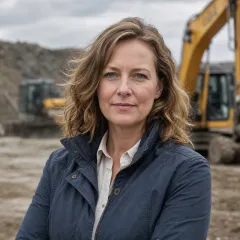
Last year, I needed a Doosan 85 excavator for a small site job our company picked up. Not a huge contract—just a few weeks of foundation work. I called three Doosan excavator dealers within a 150-mile radius. Two of them basically laughed me off the phone when I said I only needed one machine and didn't have a fleet. The third one took my order seriously, and that experience taught me more about equipment purchasing than any training session ever did.
Look, I manage purchasing for a mid-sized construction services company—about 60-80 orders a year across 8 vendors. But when it comes to heavy equipment, I'm not a fleet manager. I'm the admin who has to figure out what machine we need, find a dealer that won't treat me like a nuisance, and get the paperwork straight so accounting doesn't reject the invoice.
And what I've found is that smaller buyers—guys like me who need one machine, not ten—often get ignored by dealers who are chasing the big rental companies. That's the surface problem. But the real issue goes deeper.
The Surface Problem: “Sorry, we don't do single units”
The first dealer I called asked how many excavators we were looking at. I said one. He said, “We usually work with customers who order in multiples.” Then he quoted me a price that was roughly 30% above MSRP and said delivery would be 6–8 weeks. (Note to self: that was the “go away” price.)
The second dealer didn't even return my voicemail. I followed up three times over two weeks, and nothing. I finally got a receptionist who said the sales team was “at a training event.” (Ugh, convenient timing.)
This is the kind of frustration that makes you wonder if you're supposed to buy a Kubota skid steer instead—because their dealer network sometimes treats smaller customers better. But that's not the point. The point is that the problem isn't just bad customer service. It's a structural issue in how the equipment industry segments its customers.
The Deeper Reason: Why Some Dealers Ignore Small Orders
Dealers have limited sales capacity. A good sales rep can handle maybe 20–40 active deals at a time. When a customer walks in wanting one mini excavator, the profit margin on that single unit might be $3,000–$5,000. Compare that to a fleet order of 20 units plus service contracts—that's $200,000+ in profit. So the rep prioritizes the big fish.
I get that. I do. But what I didn't realize until I dug into the numbers is that the cost of serving a small buyer is actually lower than serving a big fleet. No complicated RFPs. No network of sub-dealers. No multi-location logistics. One machine, one invoice, one delivery location. Yet many dealers still treat small buyers like a burden.
This is where the industry has a blind spot. They look at revenue per transaction and ignore lifetime value. That small customer I was? Over the next three years, I've placed two more orders with that third dealer (including a Doosan 85 excavator for another job, plus attachments). Total spend: around $180,000. Not a truck fleet, but not peanuts either.
The irony is that the dealer who ignored me likely lost more than they gained by being dismissive. The dealer who said yes earned a loyal customer who now recommends them to everyone in our network.
The Real Cost of Getting the Brush-Off
When you're a small buyer and you can't get a fair quote, you end up overpaying or settling for a machine that's not ideal. Let me give you a concrete example.
I needed a Doosan 85 excavator with a quick-coupler and a hydraulic thumb. The dealer who quoted me 30% over MSRP? I almost gave in because I was running out of time. If I had, I would have wasted about $15,000. Instead, I found a smaller, independent Doosan excavator dealer that specialized in single-unit sales to owner-operators and small contractors. They quoted me MSRP plus a reasonable delivery fee, and the machine arrived in three weeks.
Now, what about the bigger picture? The industry often tells you that you need a certain volume to get good service. But that's a self-fulfilling prophecy. If you're a small buyer and you're treated poorly, you might be tempted to buy cheap equipment from a less reliable brand. Or you might skip the warranty and buy used. Both of those carry risk.
The hidden cost of being dismissed is that you spend more time and energy than necessary on a straightforward purchase. Instead of focusing on your job, you're chasing down salespeople. And the stress? I've had a few sleepless nights wondering if the machine would arrive on time. (Thankfully, it did.)
“I can only speak to domestic operations. If you're dealing with international logistics or have to coordinate with a LMC truck delivery of the machine, there are probably factors I'm not aware of. But for a standard purchase within the US, the principle holds: don't let a dealer's sales structure dictate whether you get a fair deal.”
The Silver Lining: How to Find a Dealer That Treats You Right
So here's the part where I stop complaining and give you something actionable. The problem is real—but the solution isn't hard once you know what to look for.
First, ask the right questions on the first call. Not “what's your price?” but “How many single-unit sales did you do last quarter?” If they can't answer or they dodge, that's a red flag. A dealer that does a healthy number of single-unit transactions has a process for serving you.
Second, check for willingness to explain. The good dealer I worked with spent 20 minutes on the phone walking me through the differences between the Doosan 85 excavator and the next size up, even though I was only buying one. They didn't rush me. They treated me like a professional who needed information to make a decision.
Third, look for flexible payment terms. Some dealers require 50% down for small orders. That's fine if it's standard. But if they demand 100% upfront with no net terms, that's another sign they don't want your business. The dealer I used offered net-30 after a credit check, which showed they trusted me.
Fourth, ask about parts support. A dealer that stocks common parts for the Doosan 85 excavator (filters, seals, hoses) is a dealer that's committed to the machine—even for small customers. If they say “we can get anything in 3–5 days,” that's code for “we don't stock much.”
Finally, use your network. I found my dealer through a referral from a colleague who runs a one-man grading operation. That guy buys a Kubota skid steer every few years, and he told me which Doosan excavator dealer in the area actually answered his calls. Word of mouth is gold in this industry.
So, Are You Smarter Than a 5th Grader?
That keyword—are you smarter than a 5th grader questions with answers—always makes me laugh. Buying an excavator isn't a trivia game. You don't need to name the capital of Brazil or solve a math problem. But you do need to ask the kind of questions a 5th grader asks: direct, simple, and without fear of sounding dumb.
- “Why is this model better than that one?” — Ask it.
- “How long have you been a Doosan dealer?” — Ask it.
- “What happens if the machine breaks down on day 2?” — Ask it.
When I started my search, I was nervous. I thought maybe I was asking too many questions. But the right dealer wants you to ask questions. The wrong dealer will make you feel like a 5th grader. Don't settle for that.
So glad I pushed through and found the right Doosan excavator dealer. Almost went with the first dealer who quoted the inflated price, which would have eaten into my project margin and made me look bad to my boss. Instead, I got the machine I needed, at a fair price, with a relationship that's lasted years.
Bottom line: small doesn't mean unimportant—it means potential. If you're buying a Doosan 85 excavator or any other piece of equipment, don't let a dealer's corporate structure decide your fate. You have options. And the best thing you can do is ask the dumb-sounding questions that reveal how serious they are about your business.